Vintage Electronics Workbench

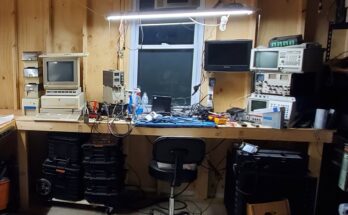
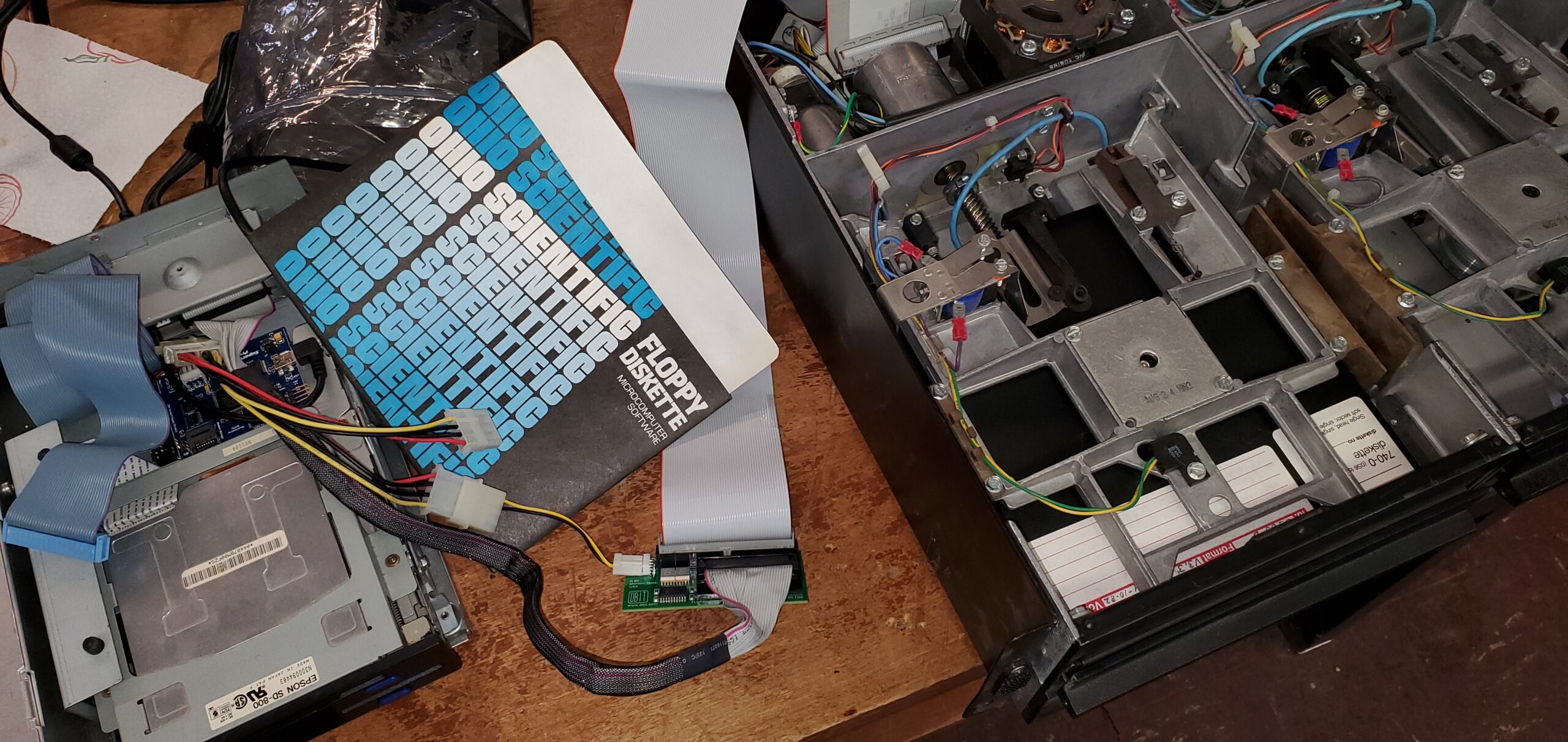
Since vintage electronics are a hobby, and not necessarily something I’m able to generally furnish the home with, I needed an adequate space in my house to work with the stuff instead of simply “collecting it”.

Enter the Man Cave. In particular, my Man Cave. A portion of my basement has been set aside for a workshop area. The previous homeowner (or his son) did computer repair in this area of the basement. There was already a homemade workbench installed which I soon turned into a workbench for hobby electronics work. Everything else got stored away in boxes and containers, or placed haphazardly on a variety of shelving systems (as depicted in the Before picture). A collection can easily get out of hand if there isn’t a direct purpose or placement for the items in the collection.

read more »

Milton Bradley’s Microvision – The First Commercial Interchangeable Electronic Game System

Microvision Handheld Game System

Forget your Nintendo DS, DSi, 3DS, or one of the many variations of cartridge based games in the past 30+ years. None of them are as innovative as Milton Bradley’s original cartridge based system, called Microvision.

My first experience with the Microvision was a few days after Christmas in 1980 or ’81. I had some spending money leftover from my holiday cash gifts and came across a discount toys bin at JCPenney. In this bin was a heavily discounted Microvision game system, so I bought it. It was one of the few LCD based electronic games available at the time, in a world where LED (red blip) games were dominant.

I played this game constantly. It uses a 9-volt battery (or two of them, depending on the manufacture date of the game unit), and I would go through batteries rather quickly. The base unit comes with the Blockbuster cartridge, which is basically a “breakout” type game where you bounce a ball off of a moving paddle and knock out blocks in a wall until you clear them all away. Unfortunately, when I bought mine, I could hardly afford to buy any additional games. Many of them were cleared out with no new inventory expected. Besides, I was a teenager with a very limited income. I would always find “something else” to spend my money on. Regardless, I got plenty of use out of the game I had. It kept me entertained on long trips in the car while on family vacations while others were still playing street sign bingo from the backseat.

The Microvision game is fairly sizable, being about a foot long and four inches wide. The cartridge games used in it are as wide and nearly as long. There is a 16×16 pixel LCD display, approximately two inches square, where each game screen is shown. All games are played with a combination of buttons, and a spinner (AKA paddle) control with about a 270 degree range of motion. The buttons are basically cutouts in the cartridge case which pass through to a 3×4 soft button matrix built into the game system body. When you change game cartridges, the buttons available to the game vary by name and position.

Another thing that changes with each game cartridge is the programming. Not unlike modern handheld game systems with interchangeable cartridges, or ROMS, the Microvision had its game programming stored on a silicon chip embedded in the game cartridge case. However, perhaps due to limiting technology at the time, a Microvision game cartridge not only contained the game code, but it was contained within its own microprocessor. The Microvision system body was not much more than a completely self contained peripheral system. It housed the LCD display, power source, power switch, button matrix, speaker, and spinner control.

Technology of the day allowed many electronics companies to build microprocessor controlled devices using a system developed by Texas Instruments known as the TMS1000 series of microprocessors. Although the TMS1000 can be the subject of of an entirely new blog post, in a nutshell, the TMS1000 system allowed companies to develop microprocessor software code and have Texas Instruments create a custom microprocessor with the programming code permanently etched on the silicon. The TMS1000 was used in many consumer devices at the time, such as calculators, printers, and other popular electronic toys.

Closeup of LCD

Closeup of LCD

Gameplay on the Microvision was simple, but it could be challenging. Some games require you use your imagination to visualize the action on such a minimal LCD matrix. The pack-in game, Blockbuster, was a familiar sight to gamers of the day. Just like Tetris was quite common to those who saw the Nintendo GameBoy when it first went on the market, Blockbuster was a very recognizable game which also happened to work quite well with the simple screen matrix.

The sound of the games are NOT going to blow you away, even compared to the revolutionary portable cassette (Walkman) units of the day. Sounds were nothing more than simple square wave tones, much like the sound of the early IBM computers before Ad-Lib and Soundblaster cards came around. At the risk of sounding like an old fart, “that’s all we had for sound and we LOVED it!!”

There were only a handful of games made for the Microvision for release in the USA. These games are:

  • Alien Raiders
  • Baseball
  • Block Buster
  • Bowling
  • Connect Four
  • Cosmic Hunter
  • Mindbuster
  • Pinball
  • Sea Duel
  • Star Trek: Phaser Strike
  • Vegas Slots

Eventually, the Star Trek: Phaser Strike game was renamed to Phaser Strike due to trademark issues.

Typical Game Cartridge Box

Typical Game Cartridge Box

Typical Boxed Cartridge Configuration

Typical Boxed Cartridge Configuration

Microvision LCD Screen Rot

Microvision LCD Screen Rot

From a collector’s standpoint, these systems and games are becoming more difficult to find in working order. Visually, the most prominent defect found on many used units is the LCD screen itself. The build quality of the LCD screen was poor. If the system wasn’t stored in a “controlled” environment, free of radical temperature changes over the years, the screen will “rot.” A “controlled” environment would simply be a home or somewhere where the temperature and/or humidity is suitable for humans throughout the year, like in a bedroom closet or something. Screen rot typically manifests itself as darkened pixels, but could look like a completely normal LCD display which is barely able to produce a noticeable image.

The game cartridges can also be found in a defective state, but hardly noticeable until the game is inserted and played. The TMS1000 chips are highly sensitive to static damage. You know how winter (or even desert) air in many areas is prone to being “dry” and the low humidity may cause a phenomenon where every doorknob you touch seems to give you a static shock from all of the moving around you do? The same static build-up can destroy a game chip. You don’t even need to see the spark to destroy it either. As long as the conditions are just right, handling the contacts on the game cartridge can cause a destructive static discharge. Visually, nothing would “look” wrong with the game. It’s only when you try to play the game and it fails to work will you know that it may have been damaged by static.

If you are looking to add a Microvision to your collection, eBay is a good place to buy systems. They appear every once in a while. You’ll tend to find more cartridges on eBay than the handheld unit itself. If you don’t trust the look of the LCD display on any of the pictures in the auctions, I recommend you verify the status of the display with the seller, maybe even ask for close-up pictures of a game in action. Rarely will you find a screen with just single pixels “missing.” Typically, if there is damage to the display, either it’s rotted and you’ll see dark splotches, or you’ll see one or more entire rows or columns of dots missing. As far as games, you can only trust the seller has personally tested them and is telling the truth about their operation.

Some of my Timex Sinclair magazine library

I’m trying to consolidate my classic computer collection (New Year’s resolution) and came across some magazines which I have acquired over the years and thought I’d post a little bit of information about them. In the Timex/Sinclair category, I found partial collections of  two different magazines: Time Design, and Synchro-Sette.

The first magazine, Time Design, was a very popular five volume (26 issues) magazine, according to worldofspectrum.org. I only have 15 out of the known 26 issues and Best Of editions on hand, but they are an interesting read and reminiscent of the old independent style computing rags available for all 8-bit platforms of the day. To get a feel for the content layout, you can view seven issues online as scanned pages at http://wos.meulie.net/pub/spectrum/magazines/TimeDesigns/

Synchro-sette was less popular out of the two sets of magazines I have in my collection. This is probably due to the fact that it was part magazine/part cassette. In those days, some magazines included recorded media which contained loadable code to go with the programs described in each issue. This saved the user much time in typing the programs in for themselves. However, these kinds of magazines were far more costly due the media costs and therefore were less popular. Many people, like myself, preferred to spend our monies on other computer gear and were content enough to type the programs in ourselves. It is my understanding that this magazine did not have a “no-cassette” option, therefore you were required to pay the huge (for the time) subscription price to get the magazine. This could have lead to the relative obscurity of the magazine. I do not have the entire collection of Synchro-Sette (I have 19 of 26 issues) nor am I lucky enough to have ANY of the cassettes. It’s a shame though. I don’t think I have ANY Timex/Sinclair cassette software in my collection. It would be cool to watch my TS1000 flicker the screen once again while waiting for one of these magazine cassettes to load. 13 cassettes were produced throughout the entire publication run.

After thumbing through several issues of the magazine, I was surprised the magazine lasted as long as it did. I found it to be rather lacking in content. Maybe if I had the cassettes, I’d think more highly about it. According to this old ClassicCmp.org Mailing List post, my first impression of the magazine may have been the right one.

Time Designs

Synchro-Sette

My collection of Time Design Timex Sinclair magazines

My collection of Syncro-Sette Timex Sinclair magazines

Inside the pages of the Nov/Dec 1985 Time Designs magazine

Close-up of part of my Syncro-Sette magazine collection

2011 Ending… What to do in 2012?

When I started the Vintage Volts website, I had one major goal in mind; to share my fondness for classic and vintage technology. Well, for the most part, my heart was in the right place. :)

When I look at what other people are doing with their retro, classic, or vintage websites, I have no choice but to admire their ability to act on their passion for their hobbies. A passion which I feel I also have, but which I have lacked the motivation to follow through with.

It’s not as easy as it looks… Trust me!

I can come up with many reasons (excuses if you will) to explain why I have not kept up on this website. Many of them are due to life’s priorities such as home, family, and work, but I do have my share of free time which I have used to focus on other things which were, quite frankly, less important than my hobbies. All in all, I always felt like a 27 hour day would be better for me to have the time I need to do everything I want to do.

So my New Year’s Resolution to all, if not only to myself, is to follow through with my hobbies and passion by remembering, admiring, and reminiscing about all of the electronic technology I became familiar with during my life. When I come across something from the past, either from my own collection or from a rare flea market find, I’ll blog about my experiences with the item and share any memories I may have of using it when growing up.

If anything, my blog posts would hopefully trigger similar recollections from you, the reader. By all means, feel free to join in the conversations.

Happy New Year, 2012!!

Attending Maker-Faire for the first time – Part 1 (a summary)

The last weekend of July 2011 is over, and my first trip to Maker Faire is completed. I took my son along with me on a 500 mile roadtrip to Dearborn, MI to attend Maker Faire:Detroit at The Henry Ford. This summary, or review as it might be interpreted, is an honest recollection of how it felt to be an attendee for the first time. It may contain some overly critical reviews.

read more »

Hobbyist Electronics – Old and New

As my son grows older, being about the same age I was when starting in the hobby, I’ve learned that he is developing the same interest in “tinkering” with technology as I did. While looking for suitable resources for him to get started in the hobby, I’m perturbed at the lack of local parts sources. When I was younger, my second home was Radio Shack. They may have not stocked every known part in existence, but they used to have enough components in stock to build something productive. Today, try finding more than a few TTL logic chips on the shelves.

Bear in mind, I’m not bashing Radio Shack. It’s just that I wish they didn’t turn into the run-of-the-mill consumer electronics store that they became. I’m hopeful that there is change on the horizon, as I’m beginning to see more hobbyist components on their shelves… or in those drawers. Hopefully, that trend will continue for all of the future generations of electronic engineers. Right now, almost every electronics component I buy is mail ordered (via the Internet). Until a local source moves in, I must accept the idea that I may need to wait a couple days for my parts.

That aside, I was also enlightened by what is considered to be a paradigm shift in the hobby. I formally got into the hobby in 1977, on Halloween to be exact. Here I was, a young’en jumping in during a rise in the popularity of hobbyist grade integrated circuits. Before this time, transistors and vacuum tubes were dominant. So, I suppose the seasoned hobbyists at the time may have felt the way I do now… a little out of touch with the present. What constitutes “out of touch”? Not necessarily an inability to comprehend modern technology, but not readily being able to accept the changes in modern technology.

I’ve always enjoyed the challenge of designing circuits (mostly digital) and getting them to run using basic building blocks such as 74XX or 40XX IC logic. These days, one of the basic building blocks is microprocessor technology (PIC, ATMel, Freescale, etc.). At first, I wondered where all the fun is in that. Where is the design challenge? In pondering that question, I’ve eventually learned to accept the hobby’s new basic building blocks and can now readily guide my son into the world of microprocessors. As I mentioned earlier, it’s not for being able to understand the technology, it’s for being able to accept it as the norm. All I needed to do was remember way back when and realize that those seasoned hobbyists building transistor only circuits in the 1970′s probably had to learn to accept integrated circuits and simply move on with them.

Overall, I find microprocessors a wonderful basic building block. As a computer programmer by trade, I was able to segue into microprocessors with ease. I’m basically shifting hardware based knowledge to a software based platform and adding a few supporting electronic components into the mix. The projects are still quite challenging and I will still be able to train my son and answer any questions he may have about the hobby.

Do you agree in this paradigm shift? Do you have any anecdotes of your own to share with others. If so, please comment on this article using the link below.

The Complete Historically Brewed Project

100100 years ago (binary), personal computers made their debut to, and for, the public masses with the formation of the Homebrew Computer Club.

This is but one of the amazing facts brought to light in the Historically Brewed newsletter series created by David Greelish. Along with interesting facts about the history of computers, there are articles on computer systems from a collector’s perspective. These include the opportunity to relive the days gone by when our Fathers, Grandfathers, or even ourselves were struggling to become a master in the fast-growing personal computer movement. Another interesting “feature” in the Historically Brewed newsletters are the peppered in vintage ads which adds a classic touch to the publication. After all, where else can you find more information about Nervine tablets to remedy your nervousness. ;)

The Historically Brewed newsletter is published no more. However, the editor and author is considering compiling a book with the entire collection of newsletters, along with some of his personal anecdotes, into one collectable book. According to David, all nine original issues, along with an unprinted tenth edition, will be published together with his own story as a member of the vintage computer “elite” who once owned or purchased a computing apparatus during the early days of personal computing.

As I look over my shoulder at a number of bound volumes of Popular Electronics magazines on my bookshelf, I find David’s idea a refreshing one. The Popular Electronics books I have came from a public library where several editions of the original magazine were bound together as one book. This makes for an easy way to own and reference physical copies of out of print publications. From a hobbyist and collector standpoint, I would appreciate it if other publishers would have done the same thing with theirs, or at least made available to the public what was once offered to libraries.

I feel the Historically Brewed book would make a fine addition to the serious collector or computer historian. It may not contain every point of view from industry players and experts from the era, but it does symbolize a period of time in the personal side of computing. For without the personal aspect, “personal” computing would have never existed.

To find out more about The Complete Historically Brewed book, or to donate to the effort, please visit the KickStarter project at: http://www.kickstarter.com/projects/dgreelish/bring-a-great-computer-history-zine-back-to-a-new

Preview of upcoming topics…

Here is a small sample of items and topics I will be discussing in the future. These discussions may be in the form of blog articles, podcasts, video podcasts, or a combination of all of them. If there is anything you would like me to discuss, let me know. If I have the item(s), I’ll put out some information about them.

Vintage forms of audio/video media
Handheld and other forms of vintage electronic gaming
Published technical information
Expansion hardware for vintage computers
Vintage computer systems
“Portable” computing
HAM Radio gear

Kenwood TS-520

Electronic board games

Milton Bradley OMNI Game

Pinball and Arcade Games

Pinball Machines

Hobbyist electronics

Educational Electronics Kits

Supplemental arcade hardware

Rowe 3500 Change Machine

Vintage Volts is now on Twitter!!

Vintage Volts is treading into the mysterious world of modern social media technology… and wants you to join in the fun.
Follow Vintage Volts on Twitter and “tweet” the experiences you have had with your favorite vintage electronic technologies.
See you there!

Vintage Volts – Episode 1!!!

Finally!!!! The Vintage Volts Podcast is officially released.

Much effort (and worry) went into creating and producing this podcast. I kept delaying it because I simply could not satisfy my own need for perfection. However, if I did not just give up on trying too hard, I would have never published my first show. Instead, I went with the purpose of doing a podcast, and that is to get information out there. And so I did. I simply recorded my thoughts on a long drive home, edited it only enough to supress background noise, and added an intro.

Now here it is for your enjoyment! It’s raw, but it’s ready. Future podcasts may have more of a studio sound to them as I work up many of the different ways I can go about recording something.

The theme music is called Galaxy Hopping. It is a recording given to me by a friend who records under the name Emdot Ambient. In this episode, I have included the entire song at the end of the podcast.

The RSS feed for iTunes (or other Podcast subscription software) is:

http://www.vintagevolts.com/podcast/rss.xml

The direct download for Episode 1 can be found here:

http://www.vintagevolts.com/podcast/Vintage_Volts_Episode_1.mp3

I’m already planning the content for Episode 2…